
- Diese Veranstaltung hat bereits stattgefunden.
´Untitled #3` Bill Adams, Claus Böhmler, Jesuis Crystiano, Joe Neave
20. Januar 2017 · 18:00 – 4. März 2017 · 16:00
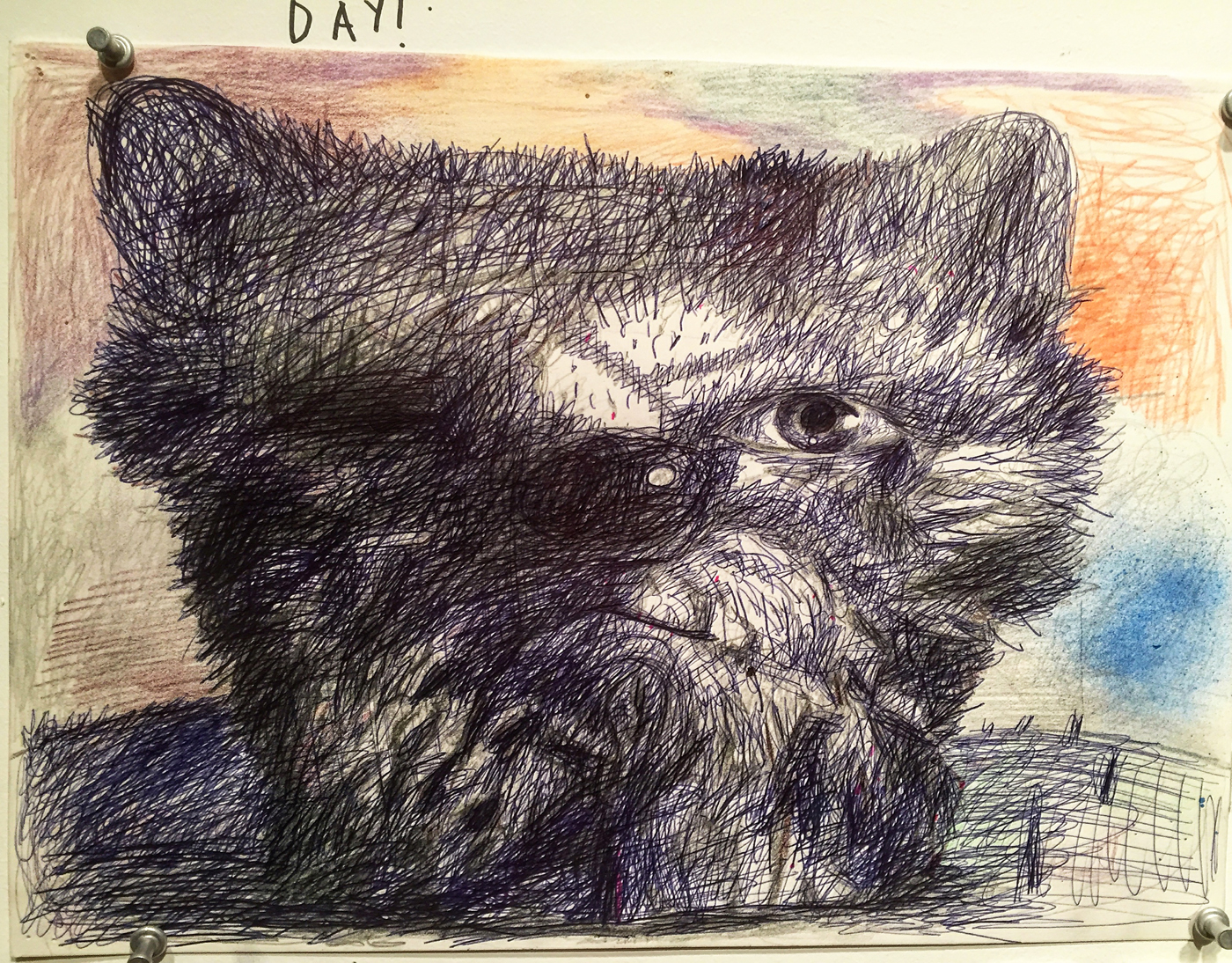
Bill Adams, Claus Böhmler, Jesuis Crystiano, Joe Neave
´Untitled #3`
Opening
January 20, 2017, 6-9pm
Exhibition
January 21 – March 4, 2017
Warhus Rittershaus
An der Schanz 1a
50735 Cologne
www.warhusrittershaus.de
Supported by Gaffel Kölsch
……………………………………..
As of today, no one has ever claimed that the death of drawing was here.
The drawing has long enjoyed an excellent reputation. In the opinion of some, it was not born as a hardliner of art history, but certainly since the times of Leonardo da Vinci, if not before, it has been highly esteemed and may do almost anything it pleases. Imagine, if you will, a revival of the disegno colore debate: today, drawing would be the clear winner of such a contest, more than ever. Drawing is highly popular. It fulfills needs because it is direct, genuine and ‚true‘. Drawing is the most liberal and free of all genres, even if it has only been considered as a seperate entity in the theory of art since the modern age. In the Renaissance it was considered the origin, the source, the mother and the father of painting, sculpture and architecture. Not for nothing were these three titans of artistic genres called the „arti del disegno“ („the arts of drawing“). Right up until the advent of the modern period, the drawing served as the base of the ‚actual‘ work of art, and hovered in the atmosphere of the practical result as it’s „transcendental principle“.(1) It was only in the modern age that the drawing became established as an unconditional and self-sufficient purpose in itself. Drawing therefore was and is always present, it is exempt from the progress of time and not subject to fashions. It is always justified, does not have to assert itself and does not constantly reinvent itself. It’s initial rawness makes it even more seductive, in line with sentimental desires. Only paper and pen are necesseary to the genius, the talented hand can show it’s virtuosity in a streak on the white. It is in this romaticised form in which drawing is usually consumed by the viewer: as the genius, magical trace through which we feel close to the draftsman, as if he had just ‚finished‘.
However, the real achievement of drawing is the mark of the figure of thought as the actualized idea! With infantile ease, drawing can formulate any kind of criticism, theory, humor, hypocrisy, and absurdity so clearly, all without necessarily making a commitment or even actually submitting to form. With radical frankness, drawing speaks a direct language, which constructs nonchalantly invented, reinterpreted, and paraphrased worlds. The drawing communicates virtually without any restraint, as if the drawn interpretation of what is seen and / or imagined were completely self-evident. It is therefore hardly surprising that drawing has always played such a fundamental role in times of artistic departure, such as can be seen in the examples of Paul Klee, Lee Lozano or Robert Crumb. Or to express it in the words of Vincent Van Gogh: „What does drawing mean? How does one start? It is nothing more than to pave the way through an invisible steel wall.“(2)
With this in mind, we are looking forward to the latest results of perforated steel walls by Bill Adams, Claus Böhmler, Jesuis Crystiano and Joe Neave.
Bis jetzt kam noch keiner auf die Idee, den Tod der Zeichnung zu behaupten. Die Zeichnung genießt schon lange und andauernd einen ausgezeichneten Ruf. Für manch einen ist sie gar nicht erst als Hardliner der Kunstgeschichte geboren worden, aber spätestens seit Leonardo da Vinci wird sie hoch gelobt und darf nahezu alles. Man denke sich nur ein Revival der disegno colore Debatte aus: die Zeichnung ginge heute viel eindeutiger als Sieger hervor. Die Zeichnung erfreut sich großer Beliebtheit. Sie erfüllt Bedürfnisse, denn sie ist direkt, echt und ’wahr’. Die Zeichnung ist die Freizügigste und Freieste unter den Gattungen, auch wenn sie in der Kunsttheorie genau genommen erst seit der Moderne eine eigene Gattung besetzt. In der Renaissance galt sie als Ursprung, Quelle, Mutter und Vater von Malerei, Skulptur und Architektur, nicht zuletzt trugen die drei Gattungsheroen lange den Titel „arti del disegno“ („Künste der Zeichnung“). Bis in die Vormoderne lag die Zeichnung dem ’eigentlichen’ Kunstwerk zugrunde und schwirrte als „Transzendentales Prinzip“(1) über dem praktischen Resultat. Erst im Vollzug der Moderne etablierte sich die Zeichnung als bedingungslose angewandte Autarkie. Die Zeichnung war und ist also immer präsent, sie ist regelrecht ’aus der Zeit gefallen’ und unterliegt keinen Moden. Sie ist unentwegt daseinsberechtigt, muss sich nicht behaupten und nicht ständig neu erfinden. Eine anfängliche Rohheit macht sie im Zuge sentimentaler Sehnsüchte stets verführerisch. Lediglich ein Blatt Papier und einen Stift benötigt der Genius und schon kann die begabte Hand über das Weiße streifen, um Virtuosität sichtbar zu machen. Derart verklärt wird die Zeichnung meist auch konsumiert: als geniale, magische Spur, durch die man sich dem Zeichner nah fühlt, als hätte er sie gerade eben noch ’vollendet’.
Die Errungenschaft der Zeichnung ist aber doch die gezeichnete Figur des Denkens als bildgewordene Idee! Mit infantiler Leichtigkeit kann die Zeichnung jede Art von Kritik, Theorie, Humor, Hirngespinsten und Absurdem derart pointiert formulieren, ohne sich unbedingt formal festzulegen und ernsthaft zu unterwerfen. Mit radikaler Offenheit spricht sie eine unmittelbare Sprache, die nonchalant erfundene, umgedeutete und paraphrasierte Welten konstruiert. Als ob die gezeichnete Interpretation von Gesehenem und/oder Imaginiertem völlig selbstverständlich ist, kommuniziert die Zeichnung geradezu hemmungslos. So ist es kaum verwunderlich, dass sie in Zeiten künstlerischen Aufbruchs stets eine fundamentale Rolle gespielt hat, man denke zum Beispiel an Paul Klee, Lee Lozano oder Robert Crumb. Oder um es mit den Worten Vincent Van Goghs auszudrücken: „Was heißt zeichnen? Wie kommt man dazu? Es ist nichts anderes, als sich den Weg durch eine unsichtbare Stahlwand zu bahnen.“(2)
In diesem Sinne freuen wir uns auf aktuelle Resultate durchbrochener Stahlwände von Bill Adams, Claus Böhmler, Jesuis Crystiano und Joe Neave.
Inci Yilmaz, January 2017
(1) Friedrich Teja Bach, Wolfram Pichler (Hrsg.), Öffnungen. Zur Theorie und Geschichte der Zeichnung, München 2009, S.16.
(2) Antonin Artaud zitiert aus einem Brief von Vincent Van Gogh in: Antonin Artaud, Œuvres complètes, Bd. 30, S. 40, zitiert aus: Jaques Derrida, Aufzeichnungen eines Blinden, München 2008, S. 49 (Anmerkungen).